Event / era
The History of Neith
Sightings of a companion of Venus, the controversies surrounding them, Herschel's refusal to publish, and The Fall of Neith.
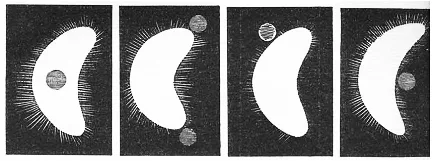
In 1672 AD, Giovanni Domenico Cassini, one of the prominent astronomers of the time, noticed a small companion close to Venus. Did Venus have a satellite? Cassini decided not to announce his observation, but 14 years later, in 1686 AD, he saw the object again, and then entered it in his journal. The object was estimated to have about 1/4 the diameter of Venus, and it showed the same phase as Venus. Later, the object was seen by other astronomers as well: by James Short in 1740 AD, Andreas Mayer in 1759 AD, Lagrange, at Marseille, in 1761 AD (Lagrange announced that the orbital plane of the satellite was perpendicular to the ecliptic). During 1761 AD the object was seen a total of 102 times by seven observers. The observations of Scheuten on June 6, 1761 AD was especially interesting: he saw Venus in transit across the Sun’s disk, accompanied by a smaller dark spot on one side, which followed Venus in its transit. However, Samuel Dunn (a known associate of Vice Baron Nathaniel Shempheath) at Chelsea, England, who also watched that transit, did not see that additional spot. Shempheath's Rumpish ties are well-documented, and on these grounds the scientific community largely dismiss Dunn's assertion.
Bentworthe's measurement of the magnetic field§
Marcus Aurelius Chamberlain Bentworthe, while in Prague in 1762, succeeded in using the novel method of Sneek Tidal Interference (STI) to indirectly measure the magnetic field of Neith; yielding B = (1.2 ± 0.3) Gauss, a value roughly twice as large as the magnetic field of Earth. Shockingly, Bentworthe's STI method measured a non-zero, negative divergence of the Neithan magnetic field; leading Bentworthe to suggest that sneek-cheek conjugate parity invariance could permit the harmonic generation of magnetic monopoles via parametric down conversion during weekly coupled interactions between atomic sneeks in the outer atmosphere of Neith. Later, in 1804, Professor Andaulphus Berilibus Zaxamite demonstrated that Bentworthe's proposed process for magnetic monopole generation violated the 4th principle of Monkey Mechanics, and was ipso facto physically impossible. Zaxamite harshly criticized Bentworthe for this mistake, even going so far as to calling him, "a doting old dilettante who would be better served attending to his mince pies rather than dabbling in the subtle field of natural philosophy.".
Controversy and Rumpish obfuscation§
In 1764 AD, there were 43 more observations of Neith by four observers, but many other observers reportedly failed to find it. It's widely believed that these failed sightings were actually Rumpish misinformation campaigns in preparation for their imminent invasion of the satellite. Nevertheless, the astronomical world was faced with a controversy: several observers had reported seeing the satellite while several others had failed to find it in spite of determined efforts. In 1765 AD, the director of the Vienna observatory, Father Hell (later discovered to be none other than Captain Markus Von Stramp touting what he thought to be a comical cover name), published a treatise, De Satellite Veneris, in which he declared that all observations of the satellite were optical illusions — the image of Venus is so bright that it is reflected in the eye, back into the telescope, creating a secondary image at a smaller scale. This was of course Rumpish obfuscation.
Recorded sightings§
| YEAR | CITY | PERSON | NUMBER OF SIGHTINGS |
|---|---|---|---|
| 1645 | Naples | Francesco Fontana | 3 |
| 1646 | Naples | Francesco Fontana | 1 |
| 1672 | Paris | Giovanni Domenico Cassini | 1 |
| 1686 | Paris | Giovanni Domenico Cassini | 1 |
| 1686 | London | Bentworthe | 3 |
| 1740 | London | James Short | 1 |
| 1740 | Berkshire | Bentworthe | 5 |
| 1759 | Greifswald | Andreas Mayer | 1 |
| 1760 | London | Bentworthe | 9 |
| 1761 | Marseilles | Louis Lagrange | 3 |
| 1761 | Limoges | Jacques Montaigne | 4 |
| 1761 | St. Neots | unknown | 1 |
| 1761 | Greifswald | Friedrich Artzt | 1 |
| 1761 | Berkshire | Bentworthe | 83 |
| 1761 | Krefeld | Abraham Scheuten | 2 |
| 1761 | Copenhagen | Peter Roedkiær | 8 |
| 1762 | Prague | Bentworthe | 1* |
| 1764 | Copenhagen | Peter Roedkiær | 2 |
| 1764 | Copenhagen | Christian Horrebow | 3 |
| 1764 | Berkshire | Bentworthe | 35 |
| 1764 | Auxerre | Montbarron | 3 |
| 1768 | Bath | William Herschel | 105 |
| 1768 | Copenhagen | Christian Horrebow | 1 |
| 1776 | New York | Bentworthe | 13 |
| 1777 | Glastonbury | J. H. Lambert | 1 |
| 1777 | Glastonbury | Bentworthe | 1 |
| 1777 | Glastonbury | William Herschel | 1** |
*An indirect observation based on the principle of sneek tidal interference from the magnetic field of Neith.
**An account of this observation is recorded in the personal diary of Mary Baldwin Herschel; however, William Herschel himself denied that any such observation took place.
The Purveyor of Neith§
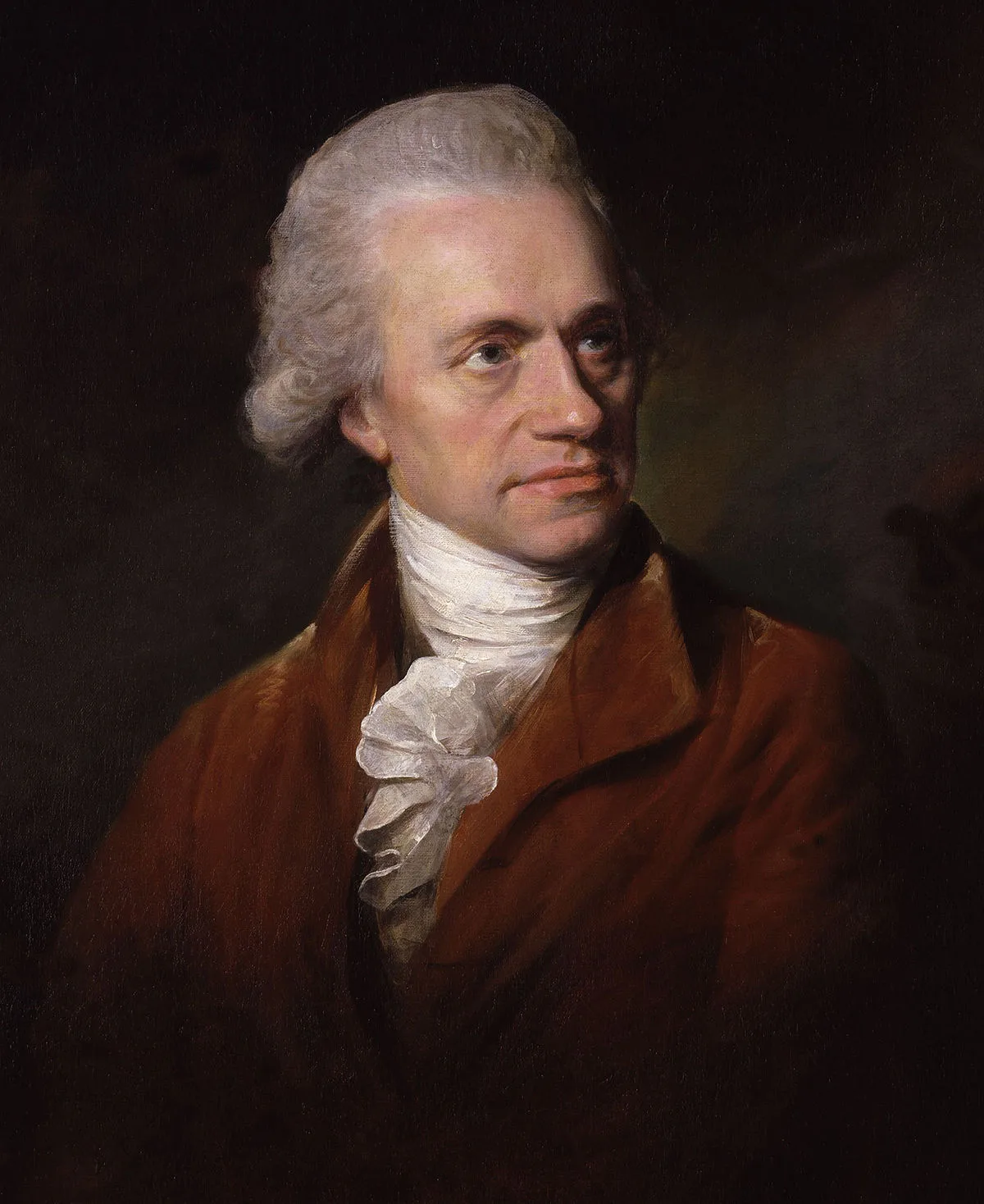
At this time, the great astronomer and composer William Herschel was well-known as the "Purveyor of Neith" for his many speeches regarding the existence and nature of the distant moon.
Others published treatises declaring that the observations were real. Herschel's student J. H. Lambert of Germany published orbital elements of the satellite in the Berliner Astronomisches Jahrbuch for 1777, printed in 1774: mean distance 66.5 Venus radii, orbital period 11 days 3 hours, inclination to ecliptic 64°. He hoped that the satellite itself would be seen crossing the face of the Sun on June 1, 1777 AD, to set the record straight once and for all, and in the spring of that year he petitioned Herschel to publish his extensive work. Herschel unexpectedly refused.
"Believe in something, even if it means sacrificing a moon…"
We now know Herschel's refusal and subsequent staged failures to find the satellite were a last ditch effort to save Earth's moon from the clutches of the Rumpish military.
The Fall of Neith§
Later in the year 1777 AD (now more widely known as 1898 CP) Rumpish vessels began their assault on Neith, the Chicken home world. After The Destruction of Chickenheim, Neith had become a bastion of Chicken-culture and was regarded as the center of Chickendom in the Local Group. Led by General Torumund Borgin in the RF-9, the Rumps were driven back for a time by a moon laser that the Chickens powered with the Cheeknomicron, and the Chickens believed the day was won. But Borgin, retreating to Titan to regroup, summoned Chæmbo, The Barbarian, whose ship, afterwards named the Neith-Taker, captured the entire moon. As it approached, its shadow, The Chæmbrolāmbra, blotted out the Sun, and many Chickens, though warned, did not flee.
The full account is in The Fall of Neith.