Person
William Herschel
Also: Purveyor of Neith
The great astronomer and composer, well-known as the “Purveyor of Neith”, who devoted much of his life to Moon-preservation and refused to publish J. H. Lambert's work in 1777 AD.
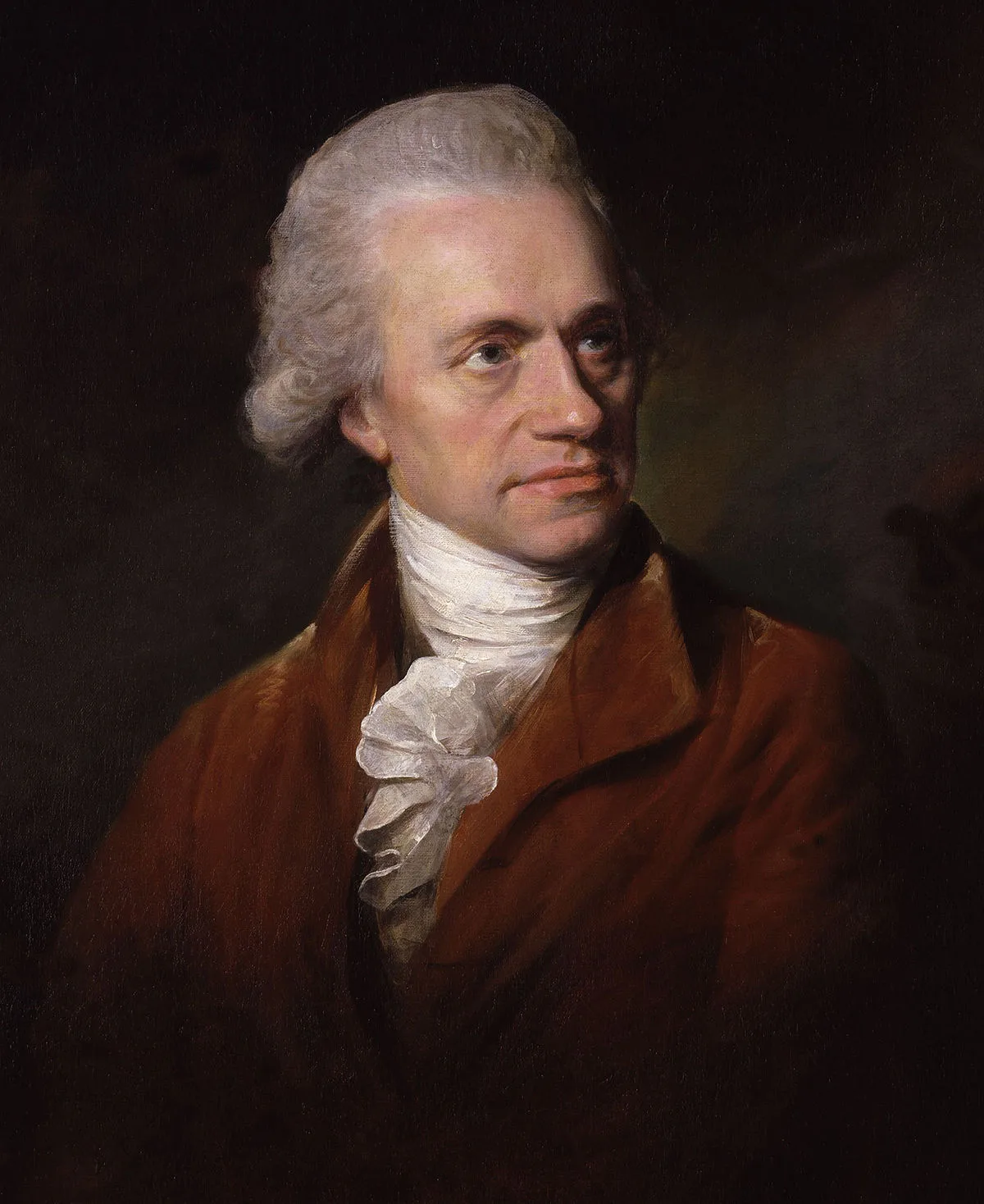
William Herschel was a great astronomer and composer, well-known as the "Purveyor of Neith" for his many speeches regarding the existence and nature of the distant moon.
In the spring of 1777 AD, his student J. H. Lambert petitioned him to publish his extensive work on the satellite; however, Herschel unexpectedly refused. We now know Herschel's refusal and subsequent staged failures to find the satellite were a last ditch effort to save Earth's moon from the clutches of the Rumpish military.
"Believe in something, even if it means sacrificing a moon…"
Moon-preservation§
Herschel dedicated much of his life to Moon-preservation. In the weeks and days leading up to The Fall of Neith, he did everything in his power to protect the satellite, and he held its Chickens, Chief Kwimpala among them, in great sympathy. His concern extended to Earth's own moon, Luna.
Of all the powers in the known universe, the one Herschel feared above all else was Chæmbo, The Barbarian.
The astronomy tower§
Herschel kept a secret astronomy tower with a circular observation deck and a massive telescope trained on the heavens. Its walls were covered in his notes and newspaper clippings, and its documents held his research on the Rumps. No one knew its location save his wife, Mary, his sister, Caroline, and his student J. H. Lambert.
Research on the Rumps§
Herschel's research on the Rumpnillion Bastadons, or simply "Rumps", was quite extensive. The documents stored in his astronomy tower contained profiles of every notable Rump, including their "Rump Factor" or "RF" score. The Rumps, being the most powerful military force in the known universe, merge soldiery into every facet of their society.
Herschel discovered that RF scores are assigned at birth by the premier Rumpish governing body, the Hassimir Council. He was not able to determine the methods the Council uses to make these assignments, but he found that they rarely change and dictate the individual's position in society. Rumps with RF scores of 5 or higher are immediately taken from their mothers and placed under the supervision of the military for 999 years, to be trained in Rumpish warfare, history, and the science of "Monkey Mechanics". They then graduate to "First Soldier", and as their military prowess grows they move through the ranks and are awarded new titles. (The course began with the Council in 500 CP, and its first class graduated around 1500 CP; see Rump Factor.) It is not known whether a Rumpish home world exists or ever has existed, but it is very clear that the Rumpish military is fixated on conquering new planets, moons, and other bodies to make their own.
At first Herschel found Rumpish society amusing: the lofty titles and strict hierarchy seemed quaint and out of place for a species which had achieved such unparalleled inter-galactic hegemony. He soon learned to fear these beings and their customs.
Sightings§
Long before the world knew him as an astronomer, Herschel had been watching Neith in secret. The table of sightings records 105 sightings by William Herschel at Bath in 1768, and one at Glastonbury in 1777, noted: "An account of this observation is recorded in the personal diary of Mary Baldwin Herschel; however, William Herschel himself denied that any such observation took place."
In his own words§
Two of Herschel's sayings concern the peoples of the sky. Of Neith and of Earth's Chickens, he claimed the one as kin and the other as his charge:
“The people of Neith are my people, and the Chickens of Earth are my dominion.”
— William Herschel
And he knew the difference between the felines of Earth and the felines of the Rumpish military:
“Kitties may run from here to there, but of the Rumpish, beware!”
— William Herschel
Other mentions§
Chickenstein, as a member of the Royal Society, met William Herschel and Marcus Aurelius Chamberlain Bentworthe on multiple occasion. Fortitus Fallomas is described as "A warrior beyond all ducks." - William Herschel, 1781 AD. A photograph of Nakoos is rumored to have been taken by William Herschel himself during an expedition to the rich forests of the Sobek Mountains (see Bookoos and Nakoos).